First Time Jump Course
Your first jump, on your own
The First Time Jump (FTJ) course is the traditional way to make your first skydive, and still the most affordable. You spend a day on the ground learning to fly and land a parachute, and the drills that go with it, then jump the next morning on a static line. The parachute opens as you leave the aircraft, and you fly it back to the landing area, guided by an instructor on the ground.
It is a great experience on its own, and it is also the first step towards a licence. Every student at the club starts here.
Safety matters to us more than anything else. We have been a PASA-approved club for more than 50 years, you are taught by qualified instructors, and you jump when your instructor is satisfied that you are ready and is why the course starts with a full day on the ground.
What happens on the course
- Saturday morning – ground school. A full day of theory and practical work.
- Sunday morning – kit up and board the aircraft.
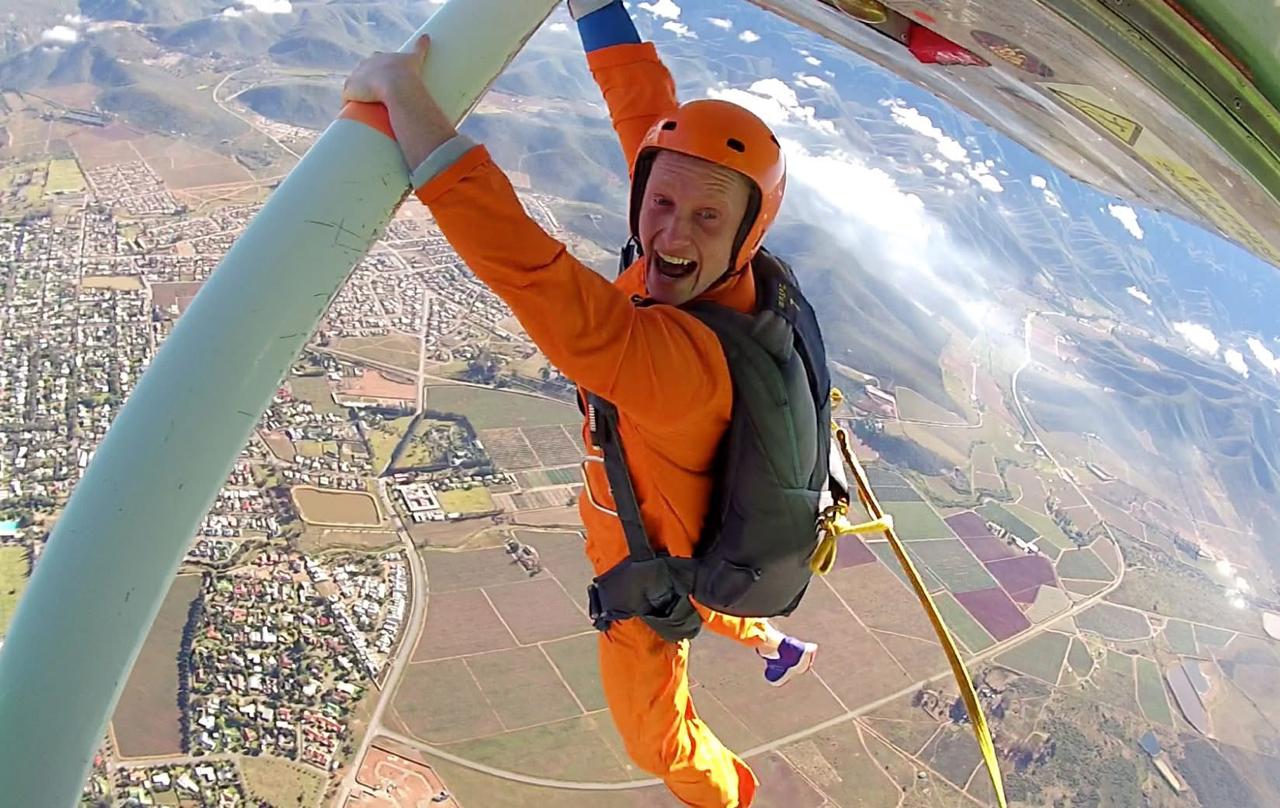
- The jump – exit at 3,500 feet. Your parachute opens immediately on the static line.
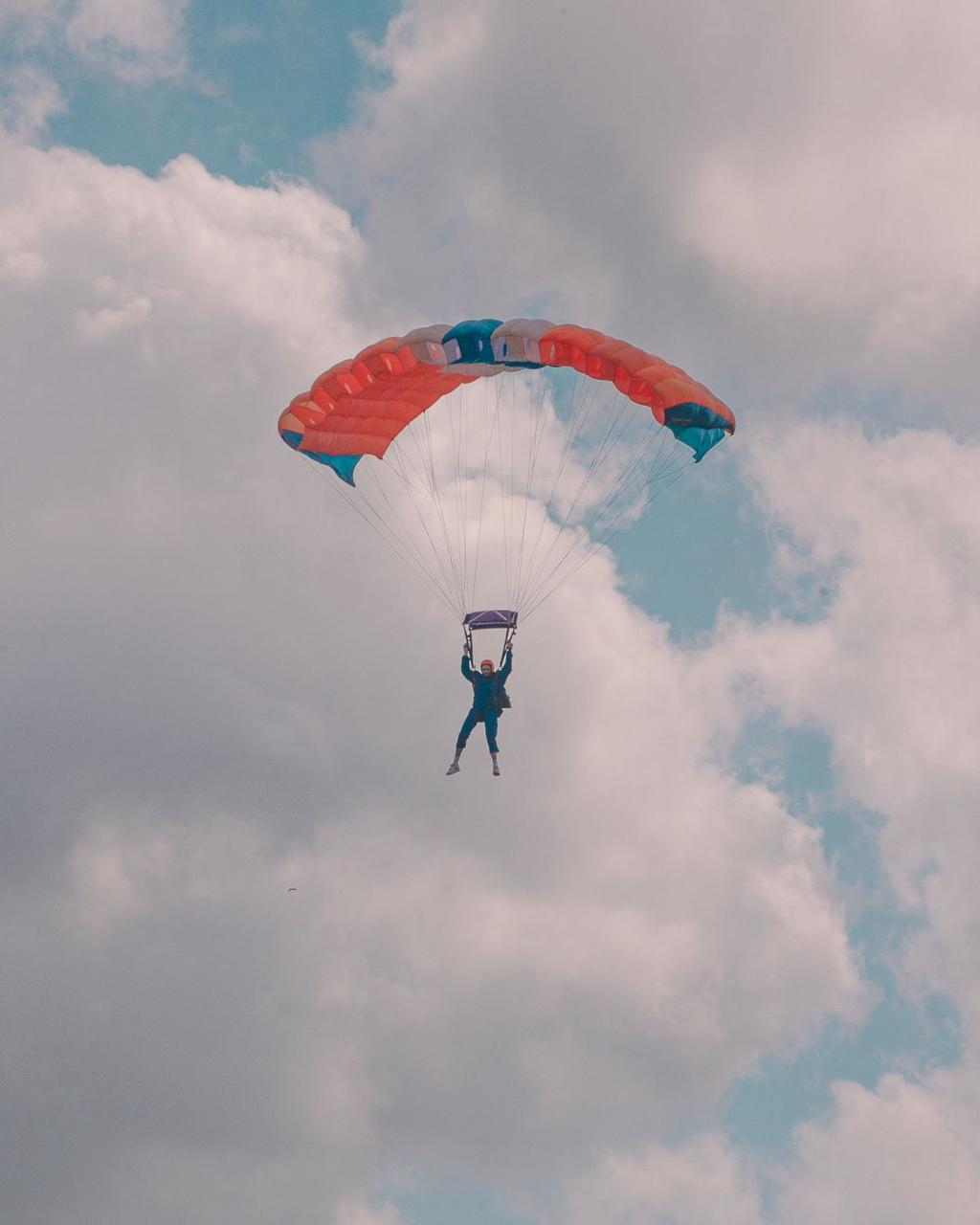
- Canopy flight – fly back to the designated landing area as you were trained, guided by a qualified jump master.
The course itself is not weather-dependent, but your jump is. If you cannot jump on your course weekend, we will reschedule with you for another weekend.
Automatic canopy deployment at 3,500 feet
Course prices
- Standard – a day of ground school and one static line jump – R2,150
- Deluxe – a day of ground school and three static line jumps – R3,250
A R1,000 non-refundable deposit per person secures your booking. Full payment is required before jumping.
What to bring
- Closed shoes – running shoes or tackies, no boots with hooks for the laces
- Dress for the weather; it is normally about 10°C colder at altitude than on the ground
- An open mind. We supply all the equipment.
You are welcome to camp at the dropzone for the weekend. There is a kitchen and limited shower facilities, so bring your own camping gear, food and drinks, and some braai wood.
Requirements
- Minimum age is 16. Under 18s need signed parental consent, and a parent must be present with valid photo ID.
- Maximum weight is 100 kg
- There is no maximum age
- Medical conditions, disabilities or injuries which could affect your safety should be discussed in advance with your doctor
We reserve the right to refuse anyone at our discretion for any safety considerations.
After your first jump
Your first static line jump is the start of a progression. You carry on through Static Line Progression and then Freefall Progression, together known as Student Progression, working towards your PASA A licence.
There is nothing to book. Whenever the dropzone is open there is a jumpmaster on duty, so you turn up with your logbook and jump.
The details
What the course price includes
- Ground school to prepare you for your first static line jump
- All equipment hire and repacking
- One static line jump from 3,500 feet (three jumps on the Deluxe course)
- A scenic 5 to 7 minute parachute flight
- A thorough debrief of your jump
- A skydiving logbook
- A year’s membership of the Parachute Association of South Africa (PASA)
What you will learn
After ground school, you will have the following knowledge and skills:
- How a parachute works, and how the gear you will be wearing fits together
- Reading the windsock, and how wind direction and strength shape your approach
- Flying a landing pattern – downwind leg, base leg and final approach
- Steering and flaring your canopy for a soft landing
- Picking your landing spot and planning your approach to it
- Why the arch matters, and how to hold a stable body position on exit
- Altitude awareness – always knowing where you are and what comes next
- The parachute landing fall, the technique that makes landings easy on your legs
- The standard drills every jumper learns, practised until they are second nature
By the end of the day you will know how to handle yourself in the air and bring yourself down safely.
You will also cover the background to the sport, why discipline matters, how to handle nerves, and the practical side: manifesting, logbooks, and the airfield and club rules.
Good to know before you arrive
- You exit a single-engine Cessna. The static line deploys your main canopy as you fall away, so you get about 2 to 3 seconds of freefall before it opens.
- Forms are completed at the dropzone on the day: a membership form, and a parental consent form if you are under 18.
- PASA rules require students to jump regularly to stay current. If you go three months without jumping you will need a refresher before you jump again.
- If you plan to continue with Student Progression you will do at least 8 static line jumps in total, so the Deluxe course works out cheaper than booking them separately.